The Hidden Weight Threat: Tracking Dead Wood Decay
Dead wood decay is an often overlooked yet crucial ecological process that plays a significant role in maintaining the health of forest ecosystems. As trees fall and decompose, they provide essential habitats and contribute significantly to the cycling of nutrients within these ecosystems. Understanding this process is vital not only for ecological balance but also for its significant impact on the global carbon budget, as decomposing wood both stores and releases carbon.
Tracking the decay of dead wood provides insights into the complex interactions within ecosystems that are essential for life on Earth. From providing habitat for diverse species to contributing to the soil fertility that supports living vegetation, decaying wood plays multifaceted roles in nature. Moreover, given the increasing concerns regarding climate change, understanding the balance of carbon release and sequestration in decaying wood is crucial for developing effective environmental policies.
By examining various factors influencing wood decay, we can better appreciate its importance in ecosystem stability and sustainability. Understanding this process will ensure that future forest management strategies and regional tree service workflows incorporate the essential roles that decaying wood plays in ecosystem dynamics.
The Basics of Dead Wood Decay: What It Is and Why It Matters
Understanding Dead Wood
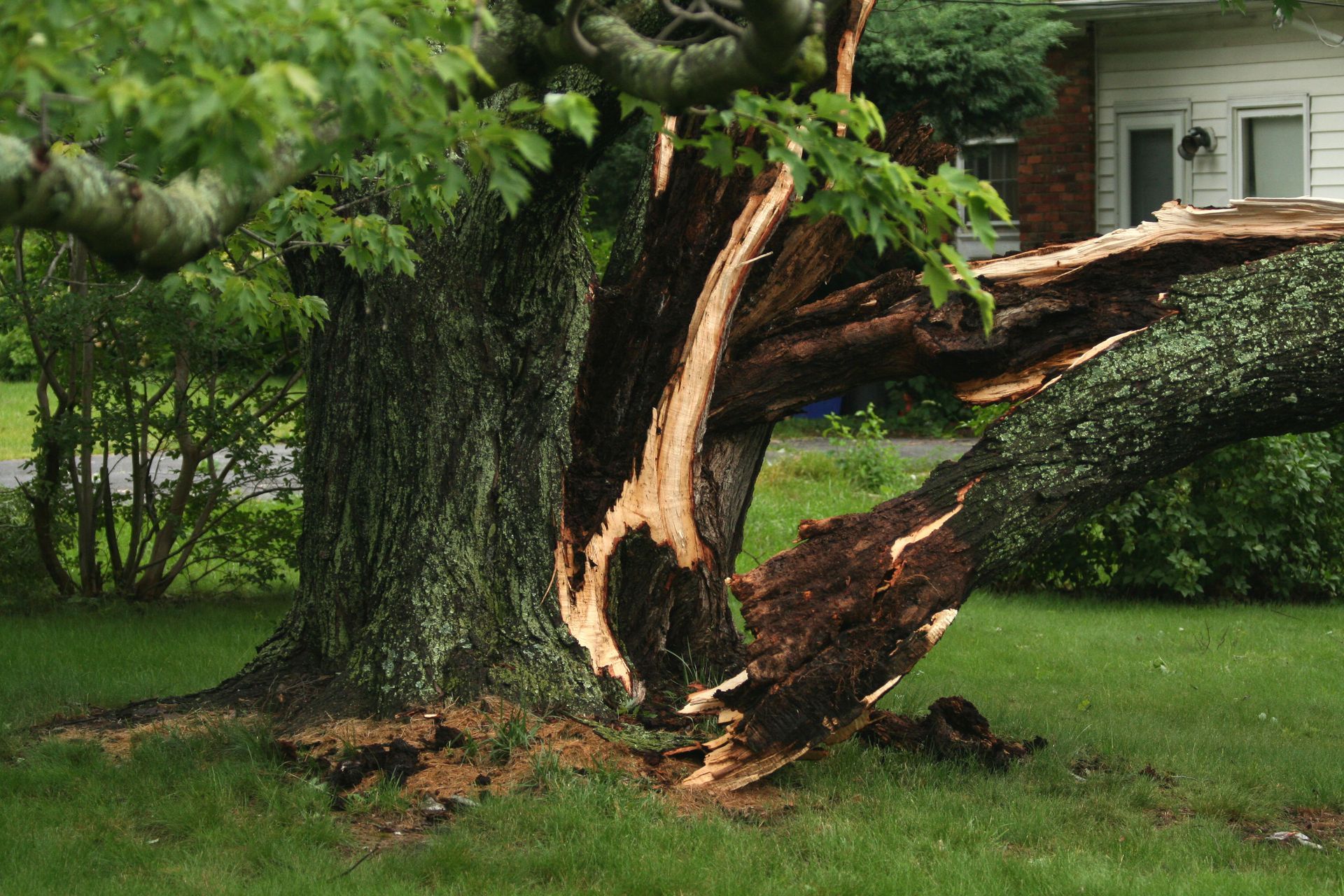
Dead wood refers to fallen trees and branches that no longer show signs of life, yet they continue to play vital roles in forest ecosystems. This wood originates from natural tree mortality, storms, or human activities like logging or professional tree service extraction, affecting its size, structure, and density. Although dead, this wood hosts an entire ecosystem, interacting with fauna and flora in the soil. Breaking down gradually over time, dead wood serves as a critical resource, supplying nutrients back into the ecosystem. Its characteristics, such as moisture content and wood type, significantly influence decay processes and subsequent ecological effects.
The Ecological Role of Wood Decay
Wood decay is a natural process with significant ecological roles, from nutrient cycling to habitat formation. As dead wood decomposes, it enriches soil with nutrients, enhancing soil fertility and promoting the growth of healthy vegetation. Additionally, decaying wood serves as a habitat for various organisms, including fungi, insects, and birds, contributing to biodiversity.
The decay process also influences water retention in soils, essential for the survival of many plant species, especially in forested regions. These ecological functions highlight dead wood's importance in maintaining the intricate balance of terrestrial ecosystems, which is why a sustainable tree service minimizes unnecessary canopy clearing.
Decomposers at Work
The decomposition process is primarily driven by fungi, bacteria, and other microorganisms that break down complex organic materials. Fungi play a leading role, breaking down lignin and cellulose, the main components of wood, enabling other organisms to further digest simpler compounds. Bacteria and insects also contribute to this process, each organism adapting to specific niches within the decay continuum.
The interactions among these decomposers are vital, forming a complex network that ensures efficient recycling of nutrients. This synergy between organisms allows ecosystems to thrive by continually replenishing the nutrients that plants require for growth.
Environmental Engineering and System Impacts
Impact on Soil and Nutrient Cycling
Decaying wood plays a critical role in enhancing soil structure and fertility by providing essential nutrients that support plant growth. As wood breaks down, it releases nitrogen, phosphorus, and other vital nutrients that mix with the soil, improving its fertility and texture.
According to Colorado State University, over 90% of a tree's essential water-absorbing and feeder roots are concentrated shallowly in the top 12 inches of the soil surface, emphasizing the importance of nutrient-rich soil. These nutrients are critical for new plant growth, establishing a continuous cycle of life and decay within ecosystems. As a result, the health of forest ecosystems heavily relies on the effective cycling of nutrients facilitated by dead wood decay, a process that any urban tree service should replicate when managing organic mulch.
Contribution to Global Carbon Cycle
Dead wood decay is a double-edged sword in the global carbon cycle, contributing to both carbon sequestration and release. As wood decomposes, carbon is initially stored in the wood biomass before being released into the atmosphere as carbon dioxide during decomposition.
This flux between carbon storage and release plays a significant role in regulating global carbon levels, influencing climate change patterns. According to studies, the large quantities of carbon stored in forest dead wood highlight its role in carbon sequestration, emphasizing its importance in the fight against climate change. Understanding this balance is crucial for developing strategies to manage carbon emissions and mitigate climate impacts.
Measuring Dead Wood Decay: Techniques and Tools
Traditional Methods for Assessing Decay
Traditional methods for assessing dead wood decay rely heavily on direct observation and manual measurements, such as tracking changes in weight and volume over time. These methods often involve field surveys conducted by ecologists and consulting tree service experts who catalog data on the condition and quantity of dead wood in different forest areas.
Manual sampling and lab analysis allow for detailed understanding, but these methods are labor-intensive and time-consuming. Despite their limitations, traditional approaches provide valuable baseline data that are essential for calibrating modern technologies. Combining these classic methods with new tools enables researchers to create comprehensive decay profiles.
Advanced Technological Approaches
In recent years, advancements in technology have revolutionized the way we measure dead wood decay, with remote sensing and digital imaging at the forefront of both research and commercial tree service analytics. Techniques such as LiDAR (Light Detection and Ranging) and UAVs (Unmanned Aerial Vehicles) allow scientists to gather large-scale data with high precision, covering vast areas quickly.
These tools make it easier to monitor land cover changes, identify decay stages, and understand spatial distribution patterns of dead wood. Additionally, advanced microscopy and molecular techniques help researchers analyze the microbial communities responsible for decomposition at a microscopic level. Integrating these technologies provides more detailed and efficient decay monitoring than traditional methods.
Fieldwork Challenges and Solutions
While fieldwork is essential to studying dead wood decay, researchers face many challenges, including accessibility, environmental conditions, and data reliability. Dense forest cover, remote locations, and challenging terrain make it difficult to reach study sites and collect specimens. Weather variations can influence decay rates, causing inconsistencies in data over time and complicating results interpretation.
To overcome these challenges, researchers often use a combination of field measurements and remote sensing data, enhancing accuracy and compensating for environmental variables. Collaboration with local communities and specialized tree service crews also improves fieldwork effectiveness and reliability.
Innovative Monitoring Techniques
Innovative monitoring techniques continue to evolve, improving our understanding of dead wood decay processes and ecological impacts. Sensor networks now track environmental conditions such as temperature, moisture, and microbial activity directly at decay sites, offering real-time data. These sensors, combined with GIS (Geographic Information Systems), enable accurate mapping of decay processes and provide predictive models of decay rates across various environments.
Linking innovative monitoring techniques with machine learning and database systems allows for the integration of complex datasets and enhances predictive analysis capabilities. These technologies hold promise for future advancements in tracking ecological processes with precision and efficiency.
The decay of dead wood is far more than a quiet postscript to a tree's life; it is a dynamic, foundational engine that drives forest vitality and global climate regulation. From the hyper-localized micro-ecosystems thriving within a single decomposing log to the massive, sweeping patterns of the global carbon cycle, dead wood plays an irreplaceable role in terrestrial stability, reinforcing why even a commercial tree service must prioritize ecological balance. By continually replenishing the shallow, nutrient-hungry topsoil where the vast majority of living feeder roots reside, this natural breakdown ensures that the forest's past directly fuels its future.
Ultimately, integrating these innovative monitoring tools with traditional ecological baselines allows for smarter, data-driven forest management strategies. Embracing the complex, cyclical reality of dead wood decay is no longer just a priority for localized conservation; it's a critical pillar in developing effective global environmental policies and safeguarding the long-term resilience of our planet. Contact RLB Tree Service LLC today to learn more.
Recent Posts